
Our Facial Eczema Risk Spore Count Bulletin has ended for 2026. Thank you to all of our sentinel farms for helping us to give you a window into the facial eczema risk on farm. We appreciate their help.
If you would like to receive our Facial Eczema email bulletin, please complete the form below.
Counts for week ending 8 May 2026
| Feilding | Awapuni | Tararua | Taumarunui | Levin | |
| No. of sites monitored: | 5 | – | 6 | – | 10 |
| Average Spore Count | 20,000 | – | 15,000 | – | 20,000 |
| Highest Spore Count: | 65,000 | – | 40,000 | – | 40,000 |
| Lowest Spore Count: | 0 | – | 0 | – | 0 |
| Facial Eczema Risk Rating (Based on average spore count) | LOW-MED | – | LOW | – | LOW-MED |
Spore counts are trending down, and the season is drawing to a close.
This is our last bulletin for the season; however, we will continue to check your grass samples if you wish to bring some in.
Facial Eczema – All you need to know
- Symptoms and signs to look out for
- FAQ’s
- How your vet can help you to manage facial eczema on your farm
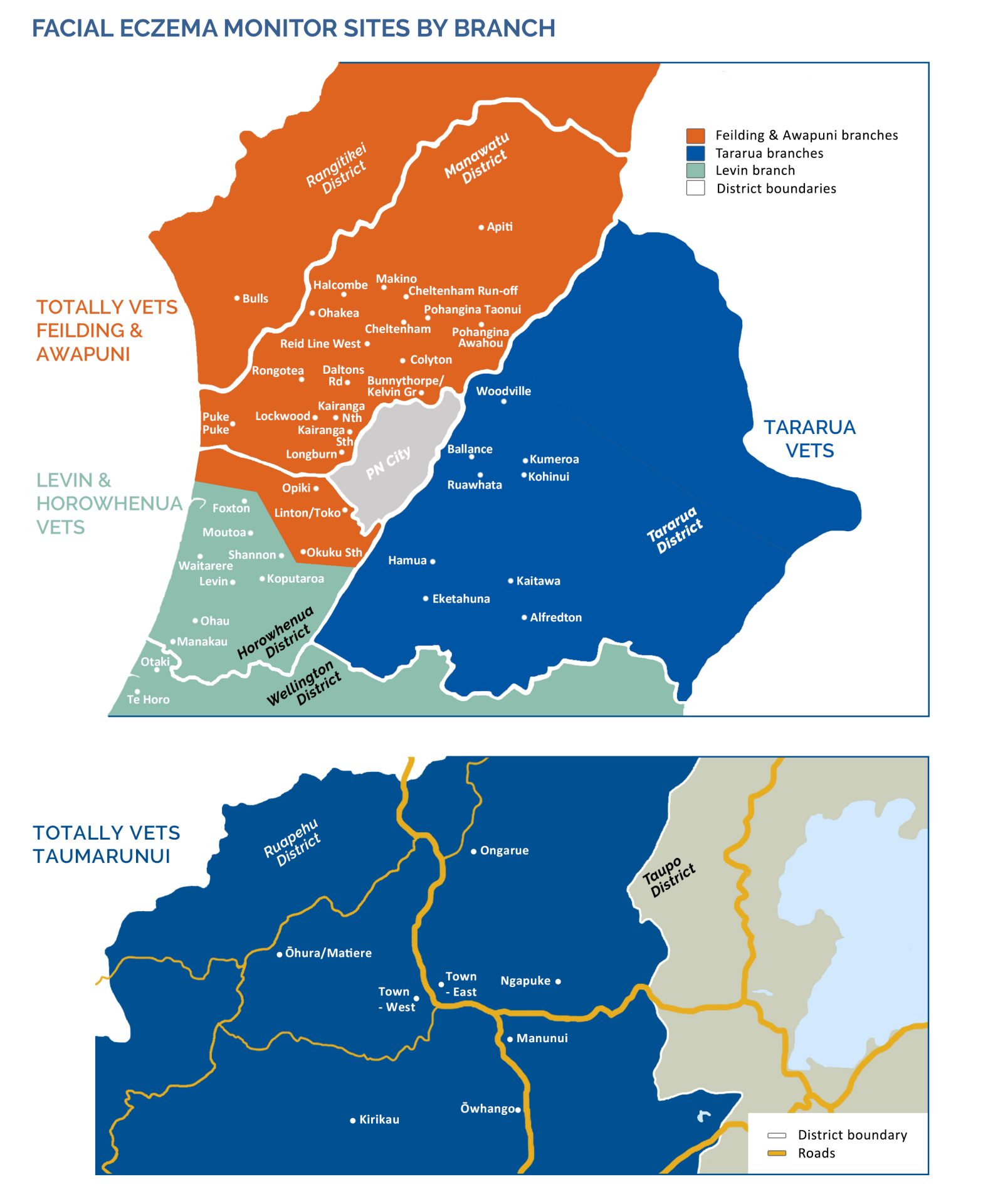
Where we monitor
Resources
Spore counts can vary greatly between properties and even between paddocks. We encourage farmers to bring in grass samples to get a more accurate idea of the facial eczema risk on their own property. Spore counting is $37 (incl GST) per sample, dropping to $30 for multiple samples.
For instructions on how to cut grass for spore counting, please see HERE
What is a toxic spore level? It is best not to use absolute levels, as stock grazing pasture with spore counts as low as 20,000-40,000 can sustain liver damage. More important considerations are rate of spore count rise, prevailing weather conditions, and grazing intensity at the time. Toxin effects on the liver are cumulative. Play it safe – start prevention as soon as spores are detected.
Contact us if you would like more information on bringing in your own samples for testing.