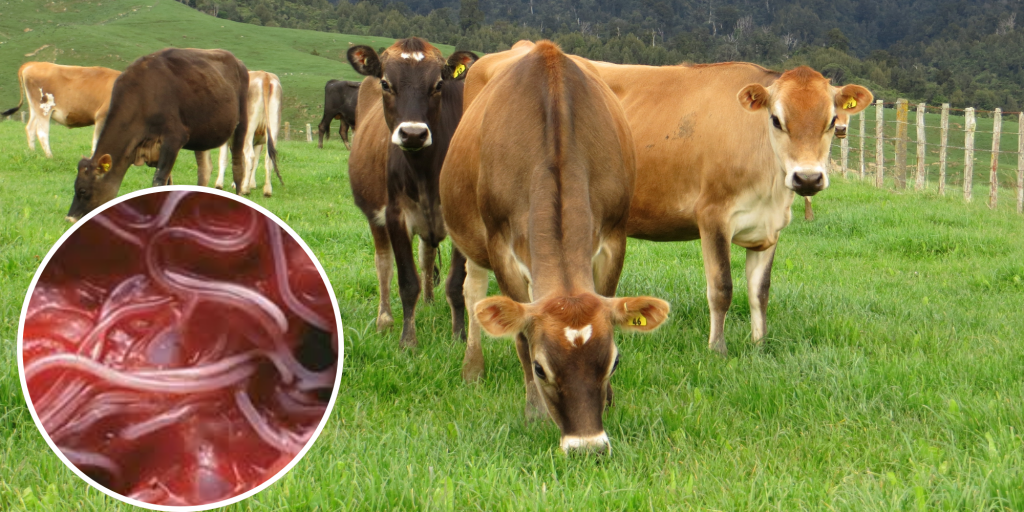
You all know the message – increasing antimicrobial resistance (AMR) is an issue for both human and animal health. There are now multiple studies that show a reducing efficacy of some of our antibiotics to our common mastitis-causing bacteria.
The responsible use of antibiotics, to ensure their effectiveness in the future and to meet market expectations, is being driven by many companies or organisations involved within the agricultural and veterinary sectors.
We can no longer evade using antibiotics responsibly.
When it comes to antibiotic dry cow therapy (DCT) products, the focus is to target cows that are likely to be infected.
Also, the latest SmartSAMM recommendations (Technote 14) is to give every cow something – a DCT product and/or an internal teat sealant (ITS) to treat any infections and to reduce the risk of any new infections over the dry period.
To be able to effectively select an appropriate dry cow strategy for your herd, targeting the right cows to administer antibiotic DCT and/or an ITS to, with the most appropriate products, we need information:
- History of DCT and/or ITS usage over the past 12 months
- Clinical mastitis case records from the previous dry period, at calving and through the current lactation, including any treatments used and the timing of those treatments
- Bulk milk somatic cell count (SCC) graph of current and previous seasons
- Average bulk milk SCC during the current lactation
- Herd test data showing individual cow SCC’s and production
- Results from milk cultures, Mastatest testing and paddle rapid mastitis testing (RMT)
- The age of each cow
- Predicted dry period length of each cow
- Management of dry cows through to the following lactation
- Teat scoring information
Antibiotic DCT is appropriate for those cows and heifers:
- Treated for clinical mastitis during the past dry period, through calving and through the current lactation.
- With 1 or more high SCC on a herd test:
- As a minimum, a single herd test SCC from the last 80 days prior to drying off, has been shown to be as predictive as having up to four herd tests across lactation, as a basis to define if a cow is infected with a major pathogen, or otherwise at drying off.
- In the past, thresholds of 150,000 for cows and 120,000 cells/ml for heifers have been used. As herds implement better mastitis management in lactation, the threshold can be increased to 200,000 cells/mL.
- With a positive RMT at dry off (in the absence of herd test data).
- Producing > 15 L of milk at the last herd test of lactation and over 4 years old:
- Such cows may be considered for antimicrobial DCT, even where their maximum SCC may be below 200,000 cells/mL.
- With teat end damage (e.g. very rough teat-ends).
Expectations when adding in an ITS:
- For low-risk cows, use of an ITS alone reduces the prevalence of mastitis at calving, leading to a lower incidence of clinical mastitis and lower ICSCC in the next lactation.
- The use of an ITS alone reduced the risk of a new intramammary infection by 73%, relative to no treatment, and 25%, relative to antimicrobial treatment.
- For cows eligible for antibiotic DCT, use of an ITS in combination with antibiotic DCT can extend the period of protection afforded by antibiotic DCT alone.
- Use of a combination of DCT and ITS reduced the risk of new infection, relative to DCT alone, in cows with a high somatic cell count in the preceding lactation. It was also shown to reduce the clinical mastitis incidence rate and reduce the herd test SCC in the subsequent lactation.
- A New Zealand study confirmed that a combination of ITS with DCT in high SCC cows resulted in approximately 40% decline in risk of clinical mastitis, relative to DCT alone.
Whole herd or blanket antibiotic DCT:
International experiences, as well as new evidence gained from NZ herds, show that only a small proportion of herds would genuinely benefit from whole herd antibiotic DCT, compared to selective antibiotic DCT.
Herds where whole herd antibiotic dry cow treatment (DCT) may be justified:
- Bulk milk SCC – mean bulk milk SCC until end of 7th month of lactation ≥200,000 cells/mL (Equivalent to whole season bulk milk SCC above 250,000 cells/mL) AND
- Indication of significant change in prevalence of infection during late lactation – mean monthly bulk milk SCC has increased by > 40,000 cells/mL between the 6th and 7th month of lactation (Equivalent to mean monthly bulk milk SCC increases across last 3 months of lactation by ≥ 50,000 cells/mL).
With whole herd or blanket DCT there is also a concurrent expectation to work alongside a veterinarian to put in place mastitis management practices that ultimately move that farm away from using whole herd DCT as a strategy to manage mastitis in the future.
Remember also that other mastitis control measures, such as effective teat disinfection, machine maintenance, staff training and culling all play important roles in maintaining sustainable improvements in mastitis management and milk quality.
Administering DCT and/or ITS:
When it comes to administering any DCT or ITS product, the Totally Vets team can provide training to any of your team or take care of the whole process for you.
When you first purchase your DCT or ITS product in store or during your milk quality consult, you will have to sign a procedure consent form acknowledging the risks of inserting DCT or ITS.
Reference – SmartSAMM recommendations, Technote 14, DairyNZ.