Trying to predict what the facial eczema (FE) season is going to do requires a crystal ball and some star gazing, however, we do have information from our years of monitoring spores to draw from to help you be prepared.
What is a high spore count?
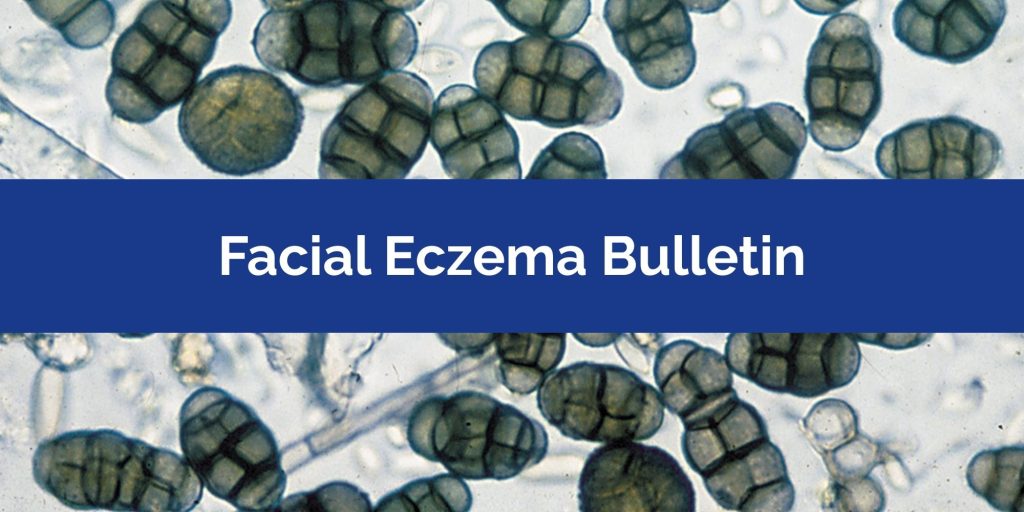
We consider a high count being anything over 40,000 spores per gram (this affects the liver of some grazing animals straight away), and counts of 20,000sp/gm over several weeks can cause liver damage.
When is the danger period?
The trend for spore growth seems to be moving earlier in the season. In previous years, we’ve recorded counts of 125,000sp/gm in mid January.
We encourage early testing for anyone with concerns around Facial Eczema. Our laboratory will accept grass for testing anytime, and we have some clients who have started bringing grass in during December.
What should I do?
Preventative strategies need to be in place at a count of 20,000 sp/gm.
You can introduce zinc by bolus, daily drenching, in the water via inline dispensers, header tanks that reticulate the water supply to troughs, or at the feed pad.
Early in the season, zinc can be added at low levels to get stock used to the addition and increased as the risk level rises. Where these options are not available, and troughs are the sole water supply, Peta dispensers can be used directly in troughs. Water intake is variable, making zinc levels in the animal less reliable.
Pasture spraying is also an option for all farming types. Spray is most effective when applied before spore counts rise as the spray does not remove existing spores.
Sprayed areas remain ‘safe’ for six weeks. Spraying does not completely eliminate the risk and is generally considered to reduce the spore numbers by 60% compared to unsprayed pasture.
Pasture that already has high spore counts should not be sprayed, as no benefit is gained.
Contact us to subscribe and for information on how to sample your own pasture.