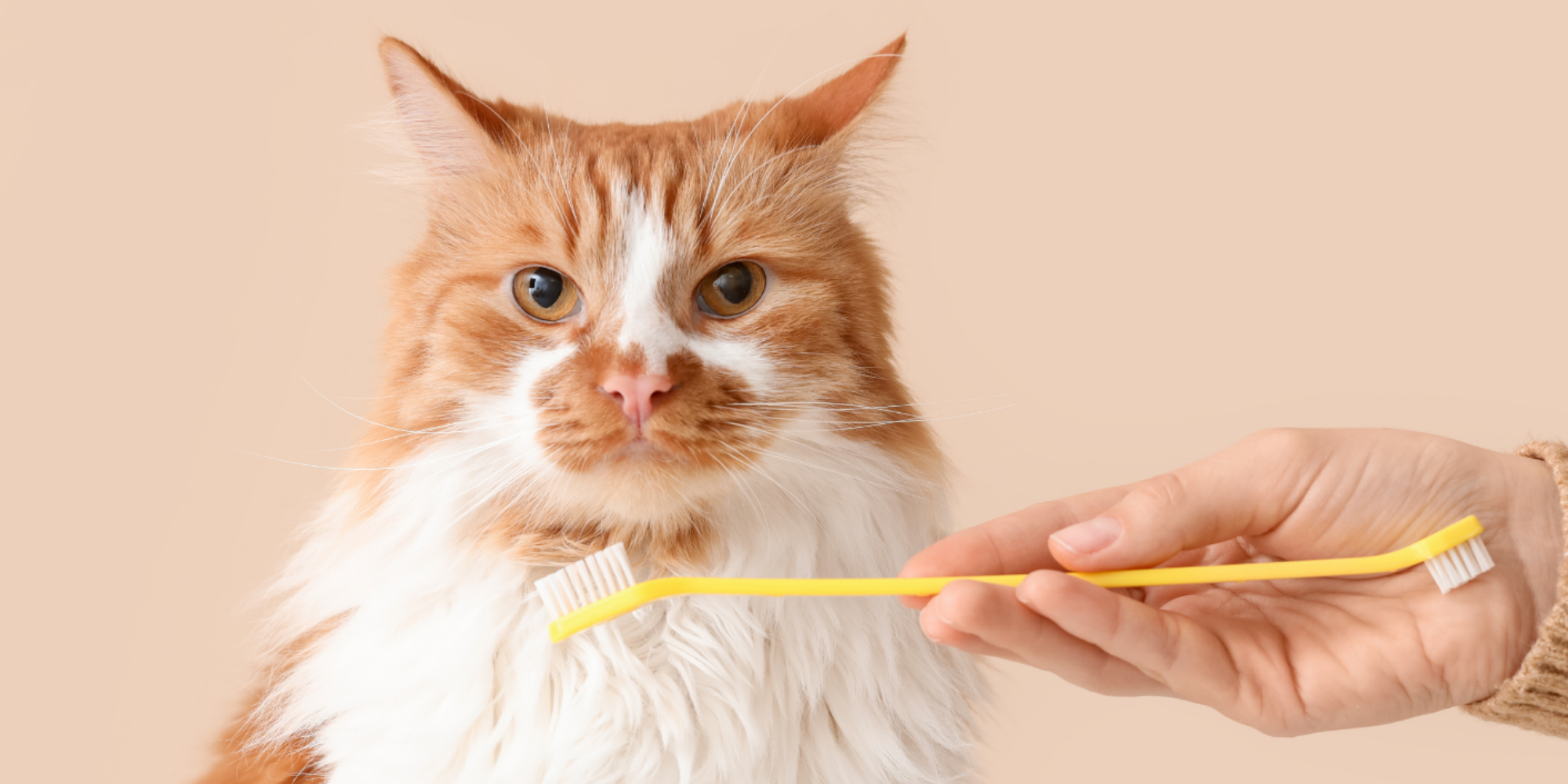
Daily tooth brushing is the gold standard for dental home care (just like for humans!). However, daily tooth brushing isn’t a realistic option for all pet owners.
We have put together home care options for owners unable to brush. All of these options are evidence-based and have shown effectiveness in reducing dental deposits and gingivitis.
When it comes to dental health, anything is better than nothing! If your pet doesn’t tolerate brushing, then using dental products like foods, chews, additives and toys, or some combination of the above is still worth doing.
Dental foods
Dry food diets are available for both cats and dogs. They are designed to keep pets’ teeth clean, while still providing them with a complete and balanced diet.
Each piece of kibble is larger than usual, specifically designed to encourage and stimulate chewing, massaging gums and aiding in the removal of plaque.
The key thing to look for is a VOHC-accepted dental diet, chews, and water additives. These have been evaluated by the Veterinary Oral Health Council.
Toothpastes & Active Brushing Products
CET enzymatic toothpaste
How it works: Contains enzymes (e.g. glucose oxidase, lactoperoxidase) that enhance the mouth’s natural antibacterial system.
Rating: ★ ★ ★ ★ ★ This is the Gold Standard
Note: This uses direct mechanical removal of plaque (from brushing) and chemical control (from toothpaste). This is the only method that actively disrupts plaque before it mineralises into tartar.
Oral Gels & Rinses
MAXI/GUARD® OraZn®, Oral Cleansing Gel, and Oral Cleansing Wipes
How it works: Zinc-based antibacterial system that inhibits bacterial growth and volatile sulfur compounds (bad breath).
Rating: ★ ★ ★ ★ ☆
Note: No brushing required. Best for pets who won’t tolerate brushing. Doesn’t provide mechanical plaque removal, however. Good for maintenance after dental procedures.
Water Additives
Aquadent
How it works: Contains anti-plaque agents + pomegranate extract to reduce bacterial adhesion and calculus formation.
Rating: ★ ★ ★ ☆☆
Note: Best for multi-pet households. Depends on the pets’ drinking from their water bowl.
TEEF
How it works: Prebiotic approach—targets oral microbiome to shift bacteria away from plaque-forming species.
Rating: ★ ★ ★ ☆☆ (emerging evidence)
Note: Non-chemical option. There’s Less long-term clinical data compared to established products
Powder Supplements
PlaqueOff
How it works: Ascophyllum nodosum (seaweed) alters saliva composition → reduces plaque adhesion and tartar formation.
Rating: ★ ★ ★ ★ ☆
Note: Easy to administer (sprinkle on food). Best for pets resistant to brushing. Long-term tartar control. NOT suitable for pets with thyroid issues (iodine content).
Dental Chews
Chews help most on chewing teeth (premolars/molars), but they’re less effective on incisors/canines.
Greenies
How it works: Textured, flexible chew designed to wrap around teeth. Scrapes plaque off teeth.
Rating: ★ ★ ★ ★☆
Note: Good plaque and tartar reduction. Very palatable, easy to get pets to eat. Keep an eye on calorie content.
Dentastix
How it works: X-shape increases tooth contact. Scrapes plaque off teeth.
Rating: ★ ★ ★ ☆☆
Note: Affordable, widely accepted. Less comprehensive cleaning vs premium chews
Veggiedent (Vegedent)
How it works: Plant-based with Z-shape design. Scrapes plaque off teeth.
Rating: ★ ★ ★ ★ ☆
Note: Good for dogs with protein sensitivities. Includes breath-freshening components.
Dental Toys
KONG Dental Toys
How it works: Rubber ridges provide mild abrasion. Can hold toothpaste or treats to increase contact time
Rating: ★ ★ ⯪ ☆☆
Note: Best for enrichment + supplementary cleaning. Not sufficient alone for dental disease prevention.
NB: Do not leave your dog unattended with any toy.